Guide
7 signs of termites in a Kerala home, and what to do next
The clearest signs of termites in a Kerala home are thin mud tubes on walls, door or window frames that sound hollow, wood that crumbles into powder, and winged termites near lights after the first monsoon rains. If you see any of them, don't spray or break the tubes. Take a photo and get the house inspected.
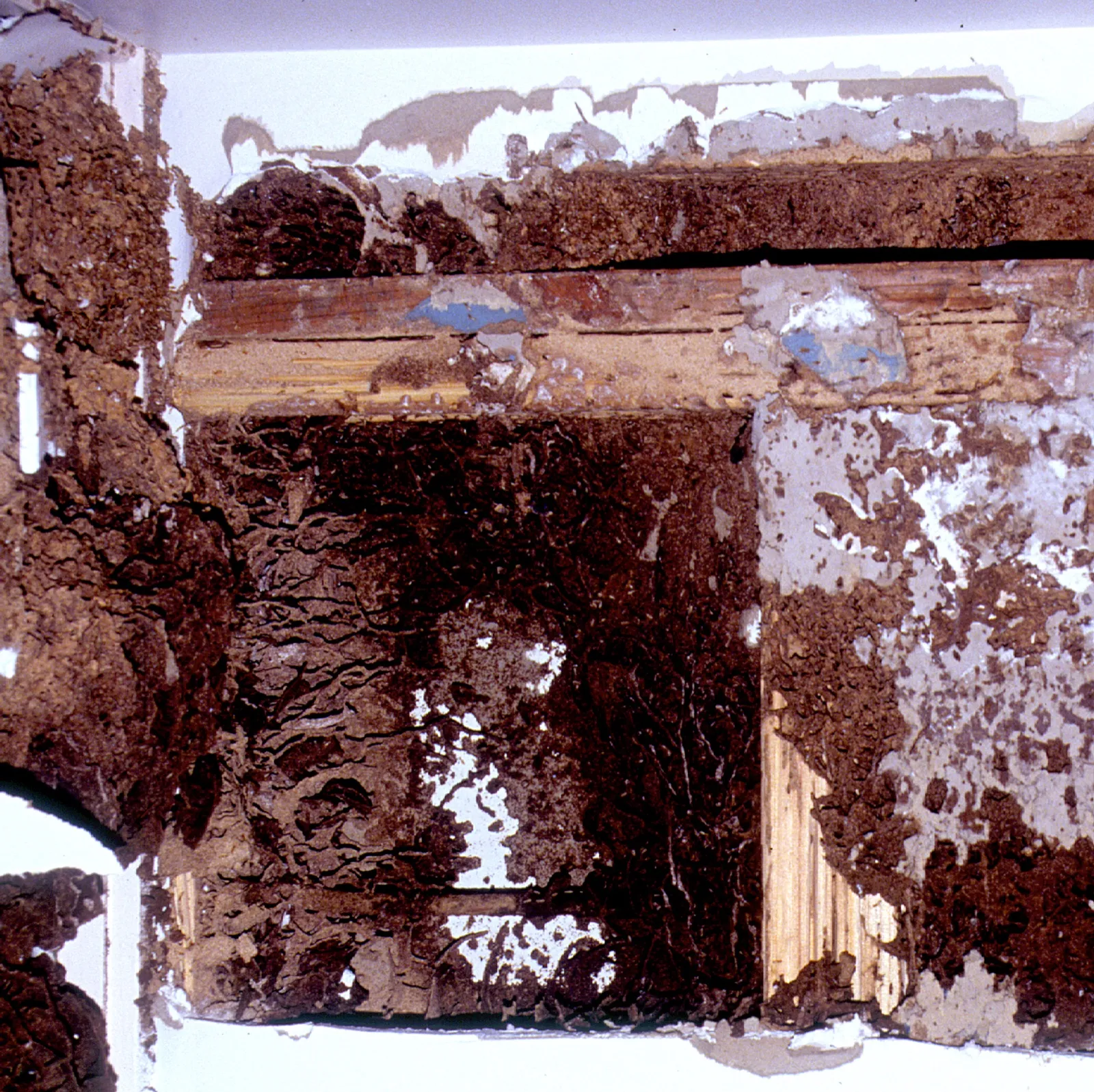
Termites (white ants) live in the soil under and around a house and come up to eat wood, paper and anything else made of plant fibre. They stay out of sight, so most families find them only after the damage is done. These are the signs to look for.
1. Thin mud tubes on walls
Termites travel inside tubes made of soil, about as wide as a pencil, to stay out of the dry air. Look along the bottom of walls, behind skirting, in corners, on the foundation outside and around pipes. A tube that runs up a wall towards a door or window frame is the most typical sign.
2. Door and window frames that sound hollow
Termites eat wood from the inside and leave the outer layer and the paint in place. Tap the bottom of door frames and the sides of window frames with your knuckle. A hollow or papery sound, or a frame that gives under your thumb, means the wood inside may be gone.
3. Wood that crumbles into powder or mud
Damaged wood breaks easily and is often packed with soil inside. Check cupboards built into walls, wooden ceilings, staircase steps and furniture that stands against a wall.
4. Wings near lights after the first rains
After the first heavy rains of the monsoon, winged termites fly out of the colony, usually in the evening, and gather around lights. Small, equal-sized wings left on window sills or floors the next morning are a sign that a colony is close by.
5. Mud in places it should not be
Termites carry soil wherever they go. Lines of mud in the gaps between floor tiles, inside electrical switch boxes or along the edges of door frames are worth a closer look.
6. Damaged books, papers and cardboard
Termites eat paper too. Stored documents, books and cardboard boxes kept on the floor or against a wall can show tunnels and mud.
7. Bubbling paint on walls or wooden surfaces
Paint that bubbles or cracks along a line can hide a termite tunnel underneath, especially near the bottom of a wall.
Why are Kerala homes at risk?
Kerala’s humid climate and long monsoon keep the soil moist, which termites need. Many houses have wooden door and window frames, built-in cupboards and timber under tiled roofs, and the colony can reach all of them from the soil through mud tubes.
What should you do if you find termites?
- Don’t spray the tubes or the wood. It kills the termites you can see, not the colony in the soil.
- Don’t break the mud tubes yet. They show the inspector where the termites come in.
- Take photos of the tubes and the damage, and note where you saw them.
- Get an inspection. Send the photos on WhatsApp to 75598 49772, or call for a free inspection at home.
Which treatment does your house need?
A house that is already built needs post-construction anti-termite treatment: small holes along the floor–wall line are filled with termiticide and sealed, and affected frames are treated. A house that is still being built needs pre-construction treatment, where the soil is treated in stages from the foundation to the plinth.
Questions people ask
Are termites and white ants the same?
Yes. In Kerala termites are often called white ants. They are pale and soft-bodied, but they are not ants.
When do termites swarm in Kerala?
Winged termites usually fly out after the first heavy rains of the monsoon, often in the evening near lights.
Will spraying insecticide on the wood stop them?
It kills the termites you can see, but the colony lives in the soil. The soil under and around the house has to be treated.
Is the inspection free?
Yes. Quality Pest Controls inspects your home free, with no visiting charges, and tells you the price before any work.